What Is a Domain Name? Complete Beginner's Guide (2026)
If you've ever wanted to create a website, start a blog, launch an online business, or build a personal brand, one of the first terms you'll encounter is domain name.
But what exactly is a domain name? Why does every website need one? How do domain registration and website domains work? And how do you choose the right domain for your website?
For beginners, domain names can seem technical and confusing. However, understanding domain basics is one of the most important parts of learning how the internet works.
This complete domain guide will explain everything you need to know about domain names in 2026, including domain registration, domain extensions, how website domains function, and best practices for choosing the perfect domain.
By the end of this guide, you'll understand the fundamentals of domain names and feel confident purchasing and managing your own website domain.
What Is a Domain Name?
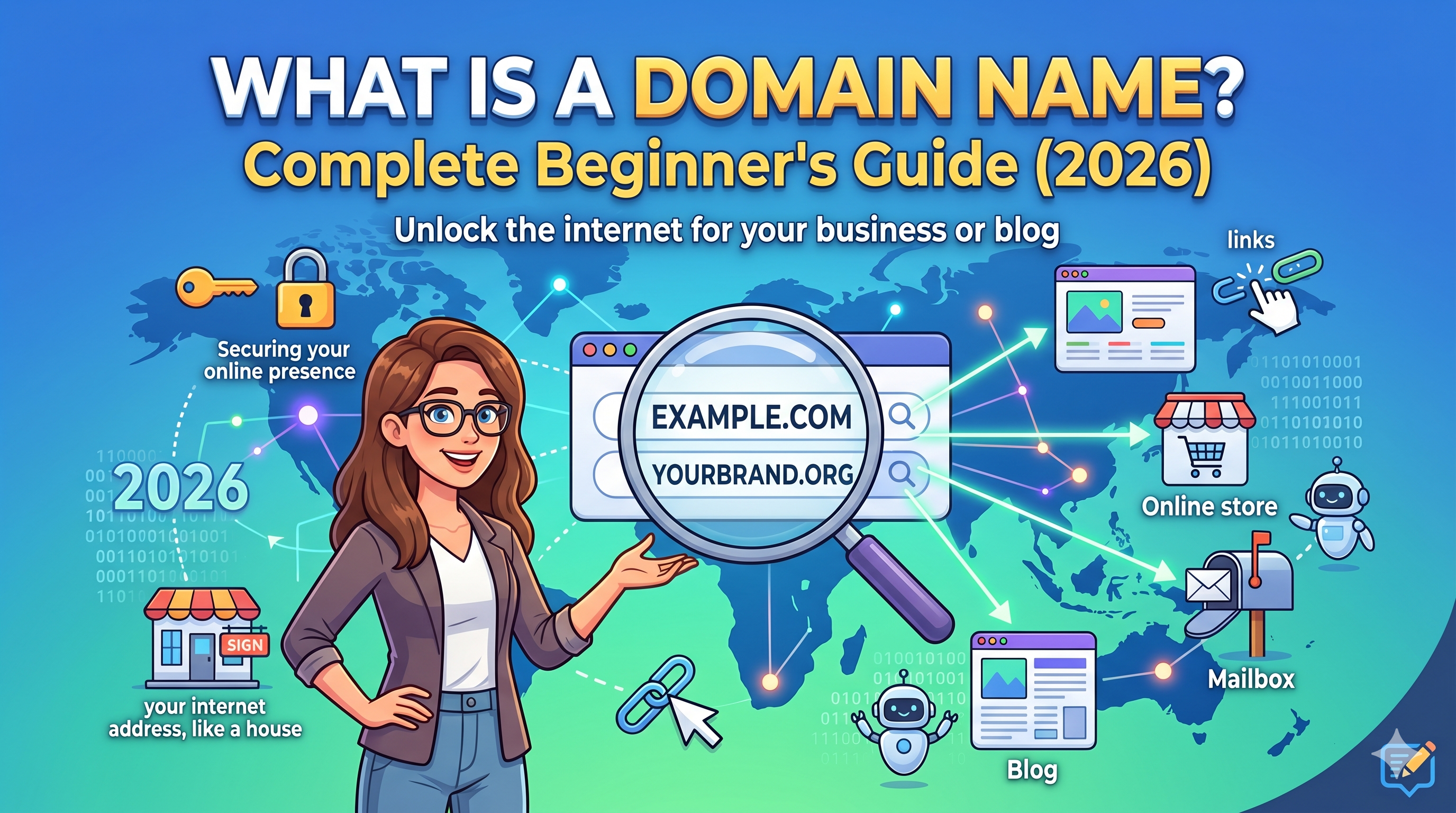
A domain name is the unique address people type into a web browser to visit a website.
For example:
- google.com
- youtube.com
- wikipedia.org
- amazon.com
These are all domain names.
Instead of remembering a complicated string of numbers known as an IP address, users can simply type a domain name into their browser.
A domain name acts like the street address of a website, helping visitors find the correct destination on the internet.
Simple Analogy
Think of the internet as a massive city.
- Your website is a house.
- The server is the land where the house is built.
- The domain name is the street address people use to find it.
Without an address, finding the correct house would be nearly impossible.
Why Are Domain Names Important?
Domain names play a critical role in making the internet accessible and user-friendly.
Benefits of Domain Names
- Make websites easy to find
- Create a professional online identity
- Support branding and marketing
- Improve credibility and trust
- Enable custom business email addresses
- Help users remember your website
Imagine trying to visit Google using an IP address instead of google.com. Domain names make navigating the internet practical for everyday users.
How Domain Names Work
To understand domain basics, it's helpful to know what happens when someone enters a domain name into a browser.
The Process Behind a Domain Name
- A user types a domain name into a browser.
- The browser contacts the Domain Name System (DNS).
- DNS translates the domain name into an IP address.
- The browser connects to the server hosting the website.
- The website loads for the visitor.
This entire process usually takes only a fraction of a second.
The Domain Name System (DNS) is often called the "phonebook of the internet" because it connects domain names with server IP addresses.
Understanding the Parts of a Domain Name
Every domain name consists of multiple components.
Consider the domain:
www.example.com
1. Subdomain
The "www" portion is known as a subdomain.
Other examples include:
- blog.example.com
- shop.example.com
- support.example.com
2. Second-Level Domain
The word "example" is the second-level domain.
This is usually your brand, company, or website name.
3. Top-Level Domain (TLD)
The ".com" portion is called the Top-Level Domain.
Popular TLDs include:
- .com
- .org
- .net
- .io
- .co
- .ai
Together, these elements create a complete website domain.
What Is Domain Registration?
Domain registration is the process of reserving a domain name through an accredited domain registrar.
When you register a domain, you gain the right to use that domain for a specified period, usually one year at a time.
You do not permanently own a domain name. Instead, you lease the rights to use it and must renew the registration periodically.
How Domain Registration Works
- Search for an available domain name
- Select a domain extension
- Register the domain through a registrar
- Pay the registration fee
- Renew the domain before expiration
Once registered, no one else can use the exact same domain name while your registration remains active.
What Is a Domain Registrar?
A domain registrar is a company authorized to sell and manage domain registrations.
Popular domain registrars include:
- GoDaddy
- Namecheap
- Porkbun
- Cloudflare Registrar
- Dynadot
- Hover
Registrars allow you to:
- Search domain availability
- Purchase domains
- Renew registrations
- Manage DNS settings
- Transfer domains
- Enable domain privacy protection
What Are Domain Extensions?
Domain extensions, also known as Top-Level Domains (TLDs), appear at the end of a domain name.
Common Domain Extensions
- .com — Commercial websites
- .org — Organizations and nonprofits
- .net — Networks and technology websites
- .edu — Educational institutions
- .gov — Government agencies
Modern Domain Extensions
- .ai
- .io
- .app
- .store
- .online
- .blog
While .com remains the most popular extension, many businesses successfully use modern alternatives.
Difference Between a Domain Name and Web Hosting
Many beginners confuse domain names with web hosting.
Although they work together, they are different services.
| Domain Name | Web Hosting |
|---|---|
| Website address | Website storage space |
| Helps users find your site | Stores website files |
| Registered through registrars | Purchased from hosting providers |
A website needs both a domain name and hosting to be accessible online.
How to Choose the Perfect Domain Name
Selecting the right domain can significantly impact branding, marketing, and user trust.
Best Practices for Choosing a Domain
- Keep it short and memorable
- Use simple spelling
- Avoid numbers and hyphens
- Choose a brandable name
- Use relevant keywords when appropriate
- Select a trusted extension
Good Domain Examples
- brightseo.com
- growthpilot.io
- marketguide.ai
Poor Domain Examples
- best-seo-services-2026-online.net
- mywebsite12345.com
- cheapbusinessmarketingtipsandtricks.org
Short, clean, and brandable domains are usually the best long-term choice.
What Is WHOIS Information?
WHOIS is a public database that stores domain registration information.
Historically, WHOIS records included:
- Registrant name
- Email address
- Phone number
- Registration dates
- Registrar details
Today, much of this information is protected by privacy regulations and domain privacy services.
What Is Domain Privacy Protection?
Domain privacy protection helps hide personal contact information from public WHOIS records.
Benefits of Domain Privacy
- Reduces spam emails
- Protects personal information
- Prevents unwanted solicitations
- Improves security
Many registrars now include privacy protection free of charge.
Can You Buy a Domain Forever?
No.
Domain names cannot be purchased permanently.
Instead, they are registered for a fixed period, typically:
- 1 year
- 2 years
- 5 years
- 10 years
You must continue renewing the registration to maintain ownership rights.
What Happens If a Domain Expires?
If a domain registration is not renewed:
- The domain expires.
- The website may stop working.
- Email services may stop functioning.
- A grace period may be provided.
- The domain can eventually become available for public registration.
Many businesses lose valuable domains because of missed renewals.
Auto-renewal is strongly recommended.
How Domain Names Affect SEO
Domain names play a smaller SEO role today than they did years ago, but they still matter.
SEO Benefits of a Good Domain
- Improves brand recognition
- Increases trust and click-through rates
- Enhances memorability
- Supports marketing campaigns
SEO Myths About Domains
- Keywords in domains do not guarantee rankings.
- Exact-match domains are not automatic SEO wins.
- .com domains do not rank better simply because they are .com.
Great content, authority, technical SEO, and user experience remain far more important ranking factors.
Common Domain Name Mistakes Beginners Make
- Choosing extremely long domain names
- Using difficult spellings
- Ignoring trademark conflicts
- Not renewing domains on time
- Buying domains without checking availability on social platforms
- Selecting confusing extensions
A little planning can prevent costly mistakes later.
Frequently Asked Questions About Domain Names
Can I Change My Domain Name Later?
Yes, but changing domains can impact SEO, branding, backlinks, and traffic. It's best to choose carefully from the beginning.
How Much Does a Domain Name Cost?
Most domain registrations cost between $10 and $30 per year, depending on the extension and registrar.
Do I Need Hosting Before Buying a Domain?
No. You can purchase a domain first and connect it to hosting later.
Can Two Websites Have the Same Domain Name?
No. Each domain name is unique and can only be registered by one owner at a time.
Final Thoughts: Understanding Domain Names in 2026
A domain name is one of the foundational building blocks of the internet. It serves as the unique address that allows users to find websites quickly and easily.
Understanding domain basics, website domains, DNS, and domain registration is essential for anyone creating an online presence.
Whether you're launching a personal blog, building an eCommerce store, starting a business website, or creating a portfolio, choosing the right domain is one of the first and most important decisions you'll make.
The best domain names are simple, memorable, brandable, and easy to share. Combined with reliable hosting and quality content, a strong domain provides the foundation for long-term online success.
As the internet continues to evolve in 2026 and beyond, domain names remain one of the most important elements of digital identity, branding, and website ownership.