Domain vs Hosting: What's the Difference and Why It Matters (2026 Guide)
If you're building your first website, you'll quickly encounter two essential terms: domain names and web hosting. While they're often purchased together and work closely together, they serve completely different purposes.
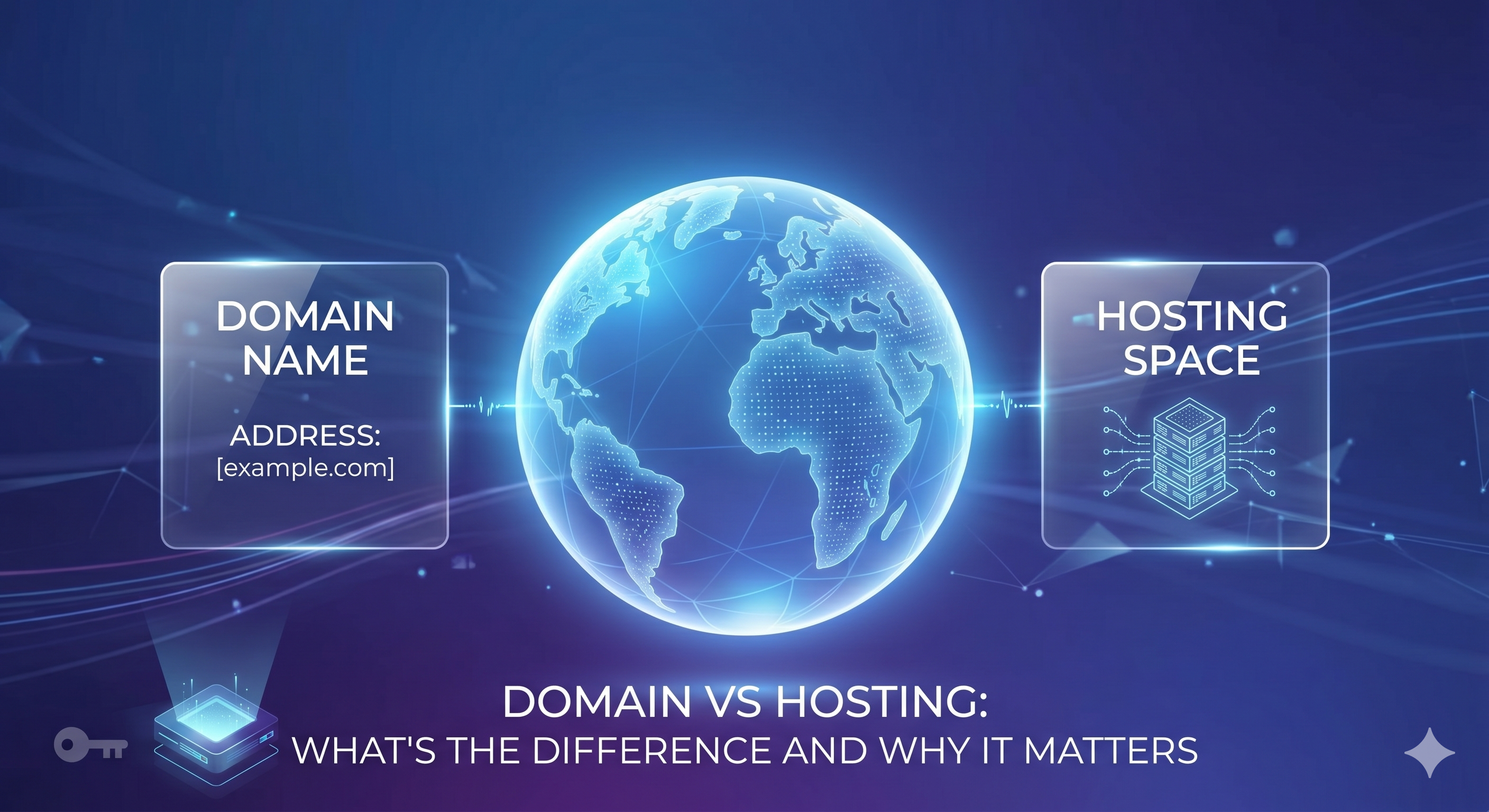
One of the most common mistakes beginners make is assuming that domain hosting and web hosting are the same thing. In reality, a domain name acts as your website's address, while hosting provides the space where your website files are stored.
Understanding the difference between domains and hosting is crucial for making informed decisions during website setup. Whether you're launching a personal blog, business website, online store, or portfolio, both components are required for visitors to access your site.
In this comprehensive hosting guide, you'll learn exactly how domains and hosting work, the key differences between them, how they interact, typical costs, common mistakes to avoid, and how to choose the right services for your website.
What Is a Domain Name?
A domain name is the unique web address people type into a browser to visit a website.
Examples include:
- google.com
- amazon.com
- wikipedia.org
- yourbusiness.com
Instead of remembering a complex numerical IP address, users can simply enter a memorable domain name.
Simple Analogy
Think of a domain name as the street address of your house.
When someone wants to visit your home, they use the address to locate it. Similarly, website visitors use your domain name to find your website online.
What Is Web Hosting?
Web hosting is the service that stores your website files and makes them accessible on the internet.
Every website contains files such as:
- HTML pages
- Images
- Videos
- CSS stylesheets
- JavaScript files
- Databases
These files must be stored on a server that remains connected to the internet 24/7.
Another Simple Analogy
If your domain name is the address of a house, web hosting is the actual house sitting on the property.
The address tells visitors where to go, while the house contains everything they came to see.
Domain vs Hosting: The Core Difference
The easiest way to understand the difference is this:
| Domain Name | Web Hosting |
|---|---|
| Your website address | Your website storage space |
| Helps users find your website | Stores website files |
| Registered through a registrar | Purchased from a hosting provider |
| Usually renewed annually | Usually billed monthly or annually |
You need both a domain name and web hosting for a fully functioning website.
How Domains and Hosting Work Together
Although they are separate services, domains and hosting work together to deliver your website to visitors.
The Process
- A user enters your domain name.
- DNS translates the domain into an IP address.
- The browser contacts your hosting server.
- The server delivers the website files.
- The website appears in the user's browser.
This process happens in seconds every time someone visits your website.
What Is Domain Hosting?
The term domain hosting often causes confusion.
Many people use it to describe services related to domain registration and management, but technically domains are not "hosted" in the same way websites are.
Domain services typically include:
- Domain registration
- DNS management
- Nameserver configuration
- WHOIS privacy
- Domain renewal services
In practice, when people say domain hosting, they're often referring to domain registration and management services.
What Is Domain Registration?
Before using a domain name, you must register it through a domain registrar.
Popular Domain Registrars
- Namecheap
- Cloudflare Registrar
- Porkbun
- Dynadot
- GoDaddy
Domain registration grants you the exclusive right to use a specific domain name for a set period.
Types of Web Hosting
Not all hosting services are the same.
Shared Hosting
Multiple websites share the same server resources.
Best for:
- Blogs
- Small businesses
- Beginner websites
VPS Hosting
Provides dedicated virtual resources within a shared server environment.
Best for:
- Growing websites
- Higher traffic sites
- Developers
Dedicated Hosting
A complete physical server dedicated to a single customer.
Best for:
- Large businesses
- Enterprise applications
- High-performance websites
Cloud Hosting
Uses multiple interconnected servers for scalability and reliability.
Best for:
- Fast-growing websites
- E-commerce stores
- Applications with variable traffic
Can You Buy Domain Names and Hosting Together?
Yes.
Many providers offer bundled solutions that include both domain registration and web hosting.
Benefits of Bundled Services
- Simplified management
- Single dashboard
- Easier website setup
- Potential discounts
However, some advanced users prefer keeping domains and hosting with separate providers for greater flexibility.
How Much Do Domains and Hosting Cost?
Domain Costs
- .com domains: $10–$20/year
- .net domains: $12–$25/year
- .org domains: $10–$20/year
- .io domains: $30–$60/year
Web Hosting Costs
- Shared hosting: $2–$15/month
- VPS hosting: $10–$80/month
- Dedicated hosting: $80–$500+/month
- Cloud hosting: Variable pricing
Your total website costs depend on the services and features you choose.
Website Setup: Connecting a Domain to Hosting
After purchasing both services, you'll need to connect them.
Typical Setup Process
- Purchase a domain name.
- Purchase hosting.
- Obtain nameserver information from the hosting provider.
- Update nameservers in your domain account.
- Wait for DNS propagation.
Once propagation is complete, your domain points visitors to your hosting server.
Understanding DNS
The Domain Name System (DNS) acts as the bridge between domain names and hosting servers.
DNS Functions
- Converts domain names into IP addresses
- Routes traffic correctly
- Supports email services
- Improves website accessibility
Without DNS, visitors would need to memorize numerical server addresses.
Common Beginner Mistakes
Thinking Domains and Hosting Are the Same
They are separate services with different purposes.
Choosing Based Only on Price
Reliability and support are often more important than small cost differences.
Ignoring Renewal Costs
Review both registration and renewal pricing before purchasing.
Not Backing Up Website Data
Hosting providers should offer backup solutions.
Forgetting Domain Renewals
Expired domains can cause website outages and loss of branding assets.
Why Monitoring Domain Expiration Matters
Many website owners focus on hosting performance while overlooking domain renewal deadlines.
If a domain expires, visitors may no longer be able to access your website even if your hosting remains active.
To avoid disruptions, website owners should regularly use a domain expiry checker to verify registration status and monitor renewal dates.
Benefits of Tracking Domain Expiration
- Prevents website downtime
- Protects your brand
- Maintains email services
- Avoids recovery fees
- Supports business continuity
You can also use a domain expiration checker tool to quickly check ownership records and expiration timelines.
Do You Need Both a Domain and Hosting?
For most websites, the answer is yes.
A domain without hosting gives visitors nowhere to go.
Hosting without a domain forces users to access your site through a server IP address, which is impractical.
Together, they create a complete website experience.
Frequently Asked Questions
Can I Buy a Domain Without Hosting?
Yes. Many people register domains before building a website.
Can I Change Hosting Providers Later?
Yes. You can move your website to a different hosting company while keeping the same domain.
Can I Use Different Companies for Domain and Hosting?
Absolutely. Many website owners prefer separate providers.
What Happens If My Domain Expires?
Your website may become inaccessible even if your hosting account remains active.
How Can I Check Domain Expiration Dates?
You can use a check domain expiration date tool to monitor registration and renewal information.
Final Thoughts: Understanding Domains and Hosting
Understanding the difference between domain names and web hosting is fundamental for anyone building a website. While domains provide the address visitors use to find your site, hosting supplies the infrastructure that stores and delivers your website content.
Both services are essential, and together they form the foundation of every successful website. By learning how domain hosting, DNS, web hosting, and website setup work together, you'll be better equipped to make informed decisions and avoid common beginner mistakes.
Whether you're creating your first blog or launching a growing business website, mastering these basics will help you build a stronger and more reliable online presence.