How to Buy a Domain Name: Complete Guide for Beginners
Buying a domain name is one of the first and most important steps in building an online presence. Whether you're starting a blog, launching an eCommerce store, creating a portfolio, or building a business website, your domain name becomes your digital identity.
For beginners, the process can seem overwhelming. Questions like “Where do I buy a domain name?”, “How much does a domain purchase cost?”, and “What is the difference between domain registration and web hosting?” are common.
The good news is that buying a domain name is easier than ever. With the right knowledge, you can secure the perfect website domain while avoiding costly mistakes.
In this complete beginner's guide, you'll learn everything about domain registration, domain marketplaces, domain purchases, website setup, and domain management so you can confidently buy a domain name in 2026.
What Is a Domain Name?
A domain name is the unique web address people type into a browser to visit a website.
Examples include:
- google.com
- amazon.com
- wikipedia.org
- yourbusiness.com
Instead of remembering a complicated IP address, users can simply type a memorable domain name.
Think of a domain name as your website's address on the internet.
Simple Analogy
If your website is a house, then your domain name is its street address.
- The website files are the house itself.
- The hosting server is the land.
- The domain name is the address visitors use to find it.
Why Buying the Right Domain Name Matters
Your domain name affects branding, marketing, trust, and long-term business growth.
Benefits of a Strong Domain Name
- Builds brand recognition
- Creates credibility
- Improves memorability
- Makes marketing easier
- Supports SEO and user trust
- Establishes a professional online presence
A great domain name can become one of the most valuable assets your business owns.
What Is Domain Registration?
Domain registration is the process of reserving a domain name through an accredited domain registrar.
When you register a domain, you gain the exclusive right to use that domain for a specified period, usually one year or more.
Once registered, no one else can use the same domain while your registration remains active.
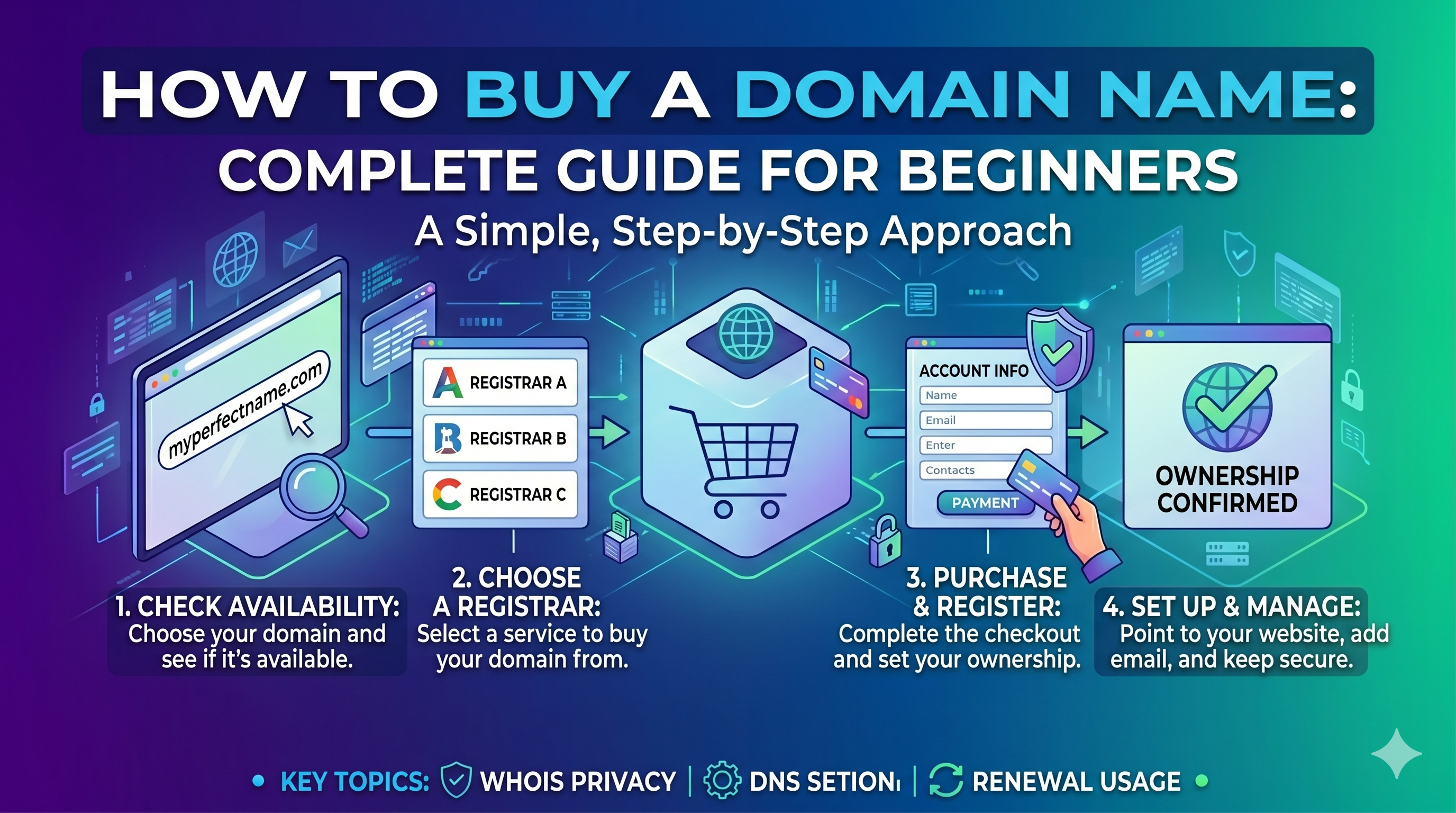
How Domain Registration Works
- Choose a domain name.
- Check availability.
- Select a domain extension.
- Complete the purchase through a registrar.
- Manage and renew the domain.
This process typically takes only a few minutes.
Step 1: Choose the Right Domain Name
The first step is selecting a domain that represents your website or business effectively.
Characteristics of a Great Domain Name
- Short and memorable
- Easy to spell
- Easy to pronounce
- Brandable
- Relevant to your niche
Best Practices
- Avoid hyphens
- Avoid numbers
- Keep it concise
- Choose a future-proof name
- Consider your brand goals
Examples of Strong Domain Names
- growthpilot.com
- brightseo.io
- marketflow.ai
Simple and memorable names tend to perform best.
Step 2: Choose a Domain Extension
A domain extension, also called a Top-Level Domain (TLD), appears after the domain name.
Popular Domain Extensions
- .com
- .org
- .net
- .io
- .co
- .ai
- .app
Why .com Is Still Popular
.com remains the most recognized and trusted extension worldwide.
When Alternative Extensions Make Sense
- .io for technology startups
- .ai for AI companies
- .app for applications
- .org for nonprofits
The extension should align with your brand and audience expectations.
Step 3: Buy Through a Domain Registrar
A domain registrar is a company authorized to sell and manage domain registrations.
Popular Domain Registrars
- GoDaddy
- Namecheap
- Porkbun
- Dynadot
- Hover
- Cloudflare Registrar
What to Look for in a Domain Registrar
- Transparent pricing
- Free WHOIS privacy
- Easy DNS management
- Strong security features
- Reliable support
Choosing a reputable domain registrar makes long-term domain management much easier.
Step 4: Explore Domain Marketplaces for Premium Domains
Sometimes the domain you want is already registered.
In these situations, you may be able to acquire it through a domain marketplace.
What Is a Domain Marketplace?
A domain marketplace is a platform where existing domain owners buy and sell domain names.
Popular Domain Marketplaces
- Sedo
- Afternic
- Dan
- Flippa
- GoDaddy Auctions
Benefits of Buying Premium Domains
- Better branding
- Shorter domain names
- Higher memorability
- Competitive advantage
Premium domains often cost significantly more than standard domain registrations, but they can provide long-term branding value.
How Much Does a Domain Purchase Cost?
The cost of a domain purchase varies depending on the extension and domain type.
Typical Pricing
- Standard .com domains: $10–$20/year
- .io domains: $30–$60/year
- .ai domains: $70–$150/year
- Premium domains: Hundreds or thousands of dollars
Always review renewal pricing before completing a domain purchase.
Step 5: Complete Your Website Setup
After purchasing your domain, you'll need to connect it to your website.
Website Setup Checklist
- Purchase hosting
- Connect nameservers
- Configure DNS records
- Install SSL certificates
- Create business email addresses
Once DNS changes propagate, your website becomes accessible through your new domain name.
Understanding DNS and Domain Management
DNS (Domain Name System) translates domain names into IP addresses so browsers can locate websites.
Common DNS Records
- A Records
- AAAA Records
- CNAME Records
- MX Records
- TXT Records
Most domain registrars provide DNS management tools directly inside their control panel.
Protect Your Domain with Security Features
Domain security is essential because your domain controls your website and online identity.
Recommended Security Measures
- Enable two-factor authentication
- Use domain lock protection
- Enable WHOIS privacy
- Use strong passwords
- Monitor account activity
Simple security measures can prevent domain hijacking and unauthorized transfers.
Monitor Domain Expiration Dates
One of the biggest mistakes website owners make is forgetting to renew their domains.
If a domain expires, websites and email services may stop functioning.
Website owners should regularly use a domain expiry checker to monitor renewal deadlines and avoid losing valuable website domains.
Benefits of Monitoring Domain Expiration
- Prevents website downtime
- Protects brand assets
- Maintains email functionality
- Avoids domain loss
- Supports business continuity
You can also use a check domain expiration date tool to verify registration details and renewal timelines.
Common Mistakes When Buying a Domain Name
Choosing a Domain That's Too Long
Shorter domains are easier to remember and market.
Ignoring Renewal Costs
Always review renewal pricing before purchasing.
Using Unreliable Registrars
Choose registrars with strong reputations and security practices.
Skipping Privacy Protection
Protect your personal information from public WHOIS records.
Buying Without a Branding Strategy
Think about long-term growth before choosing a domain.
Frequently Asked Questions
Can I Buy a Domain Name Forever?
No. Domains are leased through registration periods and must be renewed.
Can I Transfer My Domain Later?
Yes. Most domains can be transferred between registrars.
Do I Need Hosting Before Buying a Domain?
No. You can purchase a domain first and connect hosting later.
What Happens If My Domain Expires?
Your website and email services may stop working, and the domain could eventually become available to others.
How Can I Check My Domain Expiration Date?
You can use a domain expiration checker tool to view registration and expiration information.
Final Thoughts: Buying a Domain Name the Right Way
Buying a domain name is one of the most important investments you'll make when building an online presence. The right domain supports branding, credibility, marketing, and long-term business growth.
By understanding domain registration, choosing a reputable domain registrar, exploring domain marketplaces when necessary, and completing proper website setup, you can secure a valuable digital asset that supports your goals for years to come.
Remember to prioritize security, enable automatic renewals, and regularly monitor expiration dates. These simple practices help protect your domain investment and ensure your website remains accessible to visitors.
Whether you're launching your first website or expanding an existing online brand, a thoughtful domain purchase lays the foundation for long-term success.